
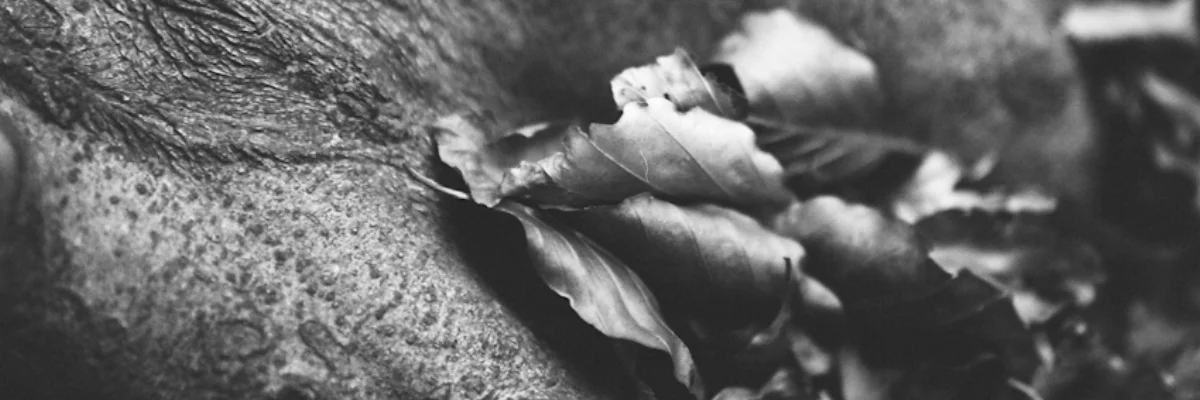
SESSION 2.
SENSE
When you live mindfully
you become more
attuned your senses.
More aware of the sensory inputs in your life and how rarely you just sense rather than think about your senses.
As your sensory awareness develops, your senses become more heightened. You will notice more details and nuances, experiencing greater pleasure from subtler stimuli.
A non-verbal awareness grows as you perceive the objects of your senses rather than the labels you attach to them. You become a fascinated observer, without analyzing or judging your experience. Your senses bring you back to living in the moment, just like your breath does. Out of your thinking mind you move into an inner place of intuitive awareness.
Taste
Take a small piece of dried fruit. Observe the appearance, take a sniff -notice how saliva starts to form in the mouth. Place it on your tongue and close your mouth. Move it around your mouth without chewing. There are four types of receptors in the mouth to discern taste -sweetness, bitterness, sourness and saltiness. Before chewing, what can you taste? Relate to the taste without naming it. Start to chew slowly. Notice the increase in saliva, the changing tastes and sensations. How do you feel? Do you feel emotionally different? As you swallow the food, be aware of the sensations in your throat and any other feelings in your body. Notice the after taste in your mouth.
Smell
Find somewhere that stimulates your sense of smell. Go outside or go to the kitchen or just start where you are now. Do any smells evoke feelings of hunger, desire or particular memories? Try smelling different things removing any judgement from the experience. Flowers, incense, soap or perfume. Food, spices or plants. Your rubbish bin, your pet’s bed, your coat. Investigate the scents you find. Natural ones and artificial ones. Smell for the sake of smelling. Breathe in deeply, see if you can pick up any new smells.
Feel
Sit down in a chair. Feel the chair, the texture. Feel the weight of your body. Feel your feet, in your socks, in your shoes, on the carpet. Stand up and feel your feet firmly planted on the ground. Walk around and pick up a selection of objects with different textures -wool, cotton, nylon, wood, metal, plastic, food. Touch and feel each one without analyzing. Select items with different qualities -smooth, rough, wet, slimy, hot or cold. Touch your skin. Touch yourself in different ways -tickle (is it really impossible to tickle yourself?), scratch, rub, tap. Use other parts of your body to touch things -your forearm, bare feet, your head. Walk outside and feel a soft breeze against your skin.
See
Take a walk on a route you are used to walking along. See what you can notice now that you are consciously bringing your awareness to it rather than being lost in thought. Choose a colour. Look around you as you walk and see what things you can see in that colour. Can you observe objects without immediately labelling them? Can you see a tree without thinking tree? Stand still for a moment. Without moving your head, become aware of your peripheral vision. How far to the right and left can you see? Look at something close to you. Observe it in even finer detail. (Put on your reading glasses if it helps.) Now look into the distance and see how far you can see. Have you noticed anything new?
Listen
Just listen. What can you hear? Bring your awareness to sounds close to you. Maybe the ticking of a clock or your watch. Put your fingers gently in each ear and listen to the sounds within your body. Can you hear your breath? Your heart? Your stomach? Pick up a pen an tap objects to hear their sound. Notice the different tones that are generated. Bring your awareness further afield to sounds far away. Can you hear any traffic noise? Are they cars, lorries or bikes? Maybe you can hear a TV next door or a distant washing machine. Maybe you can hear the sound of birds singing. Isolate one sound and focus on it. Be interested in the quality of it, the frequency, the feeling of it. What’s the loudest sound you can hear? What’s the quietest? Suspend any judgement of the sounds you hear. They are not good, or bad, they just are.
AUDIO TRACKS
Practice
Every day continue to practice your breathing formally three times. (5 mins per session) As you sit with your breath, notice sensations as they arise and pass, without judgement.
Additionally focus on one sense per day. Start by listening to the relevant audio track, bringing your attention to the particular sense.
Notice how non-judgemental awareness of your senses changes how you feel.